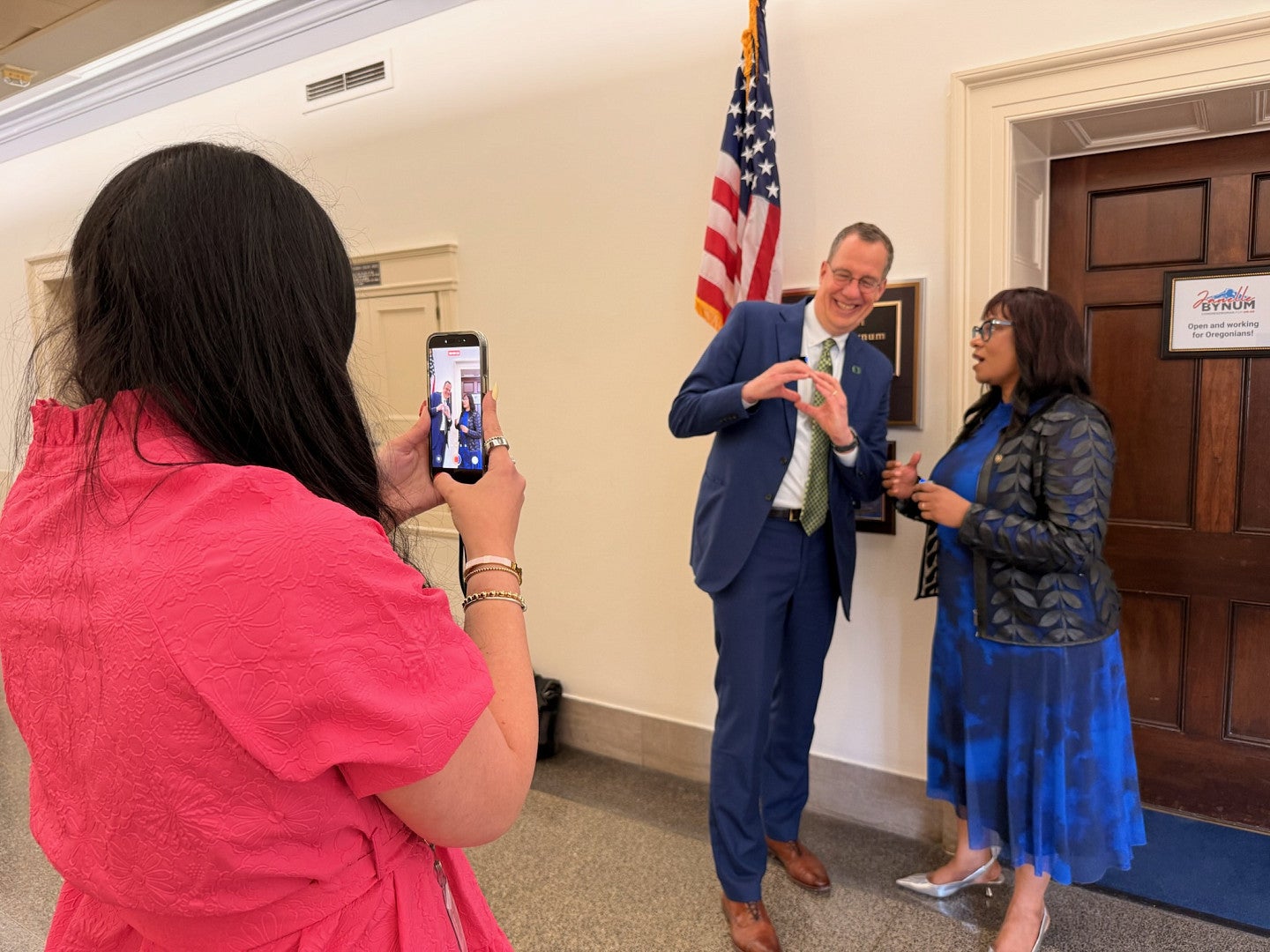
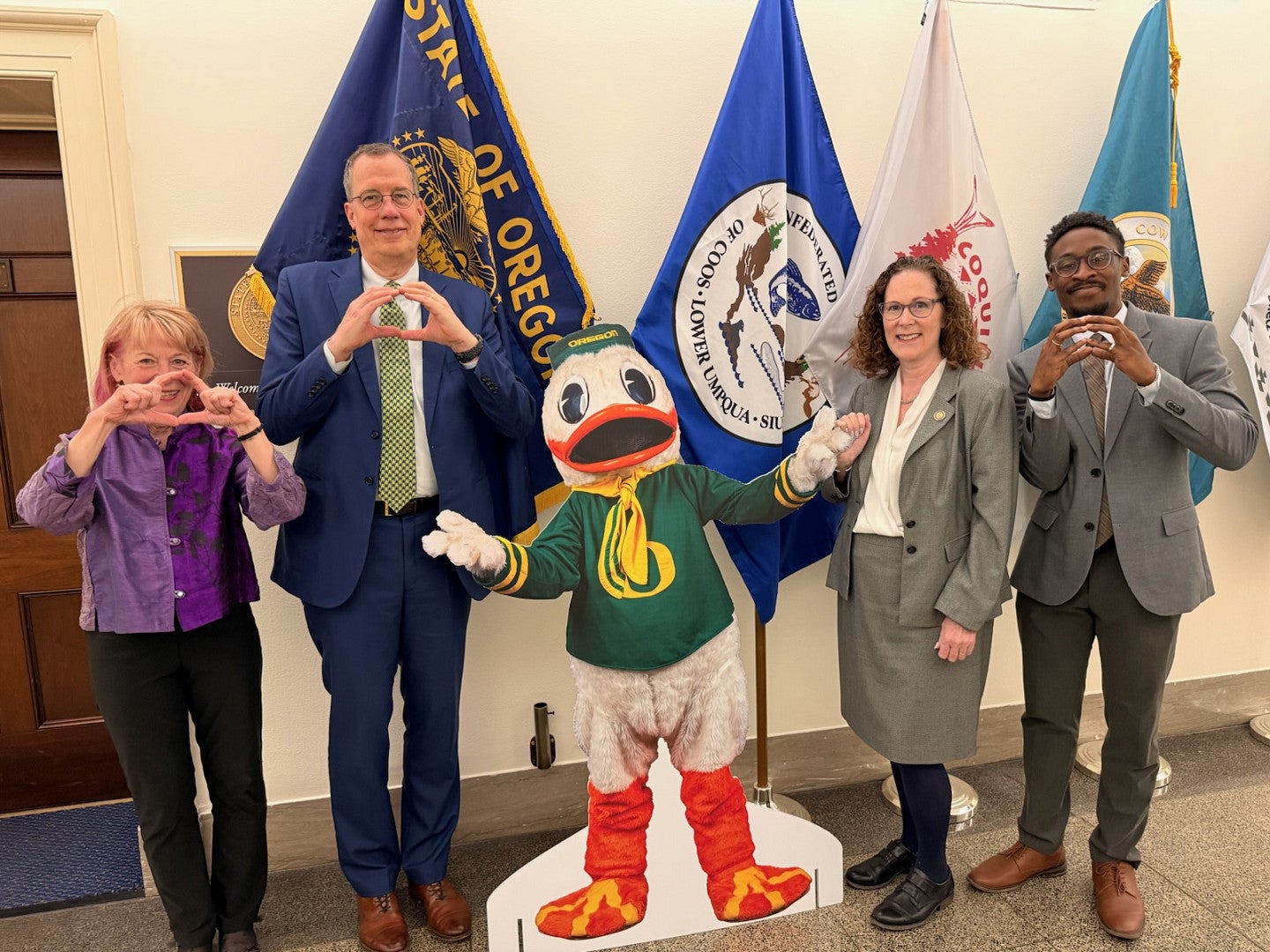
University of Oregon President Karl Scholz traveled to Washington, D.C., in late April for the Association of American Universities (AAU) spring meeting, where he met with members of Oregon’s congressional delegation to discuss UO priorities and federal support for higher education.
With the UO preparing to celebrate its 150th anniversary, the trip offered an opportunity to thank delegation members and staff for their continued partnership, hear about their priorities, and share what is ahead for the university.
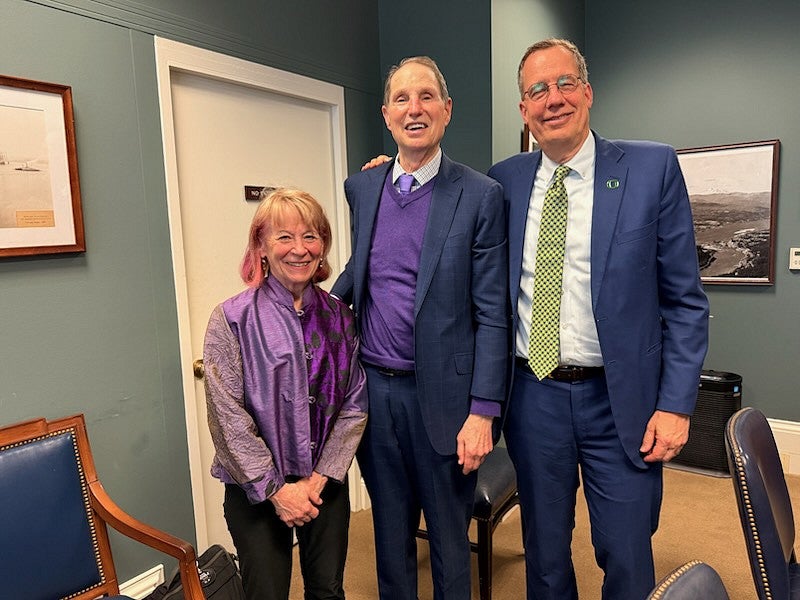
Joined by Interim Vice President for Research & Innovation, Geri Richmond, President Scholz met with U.S. Senators Ron Wyden and Jeff Merkley, and U.S. Representatives Suzanne Bonamici, Val Hoyle, Andrea Salinas, and Janelle Bynum. The meetings focused on federal issues affecting higher education, student success, and the university's research enterprise, including investments that support UO students, faculty, programs, and community partnerships.
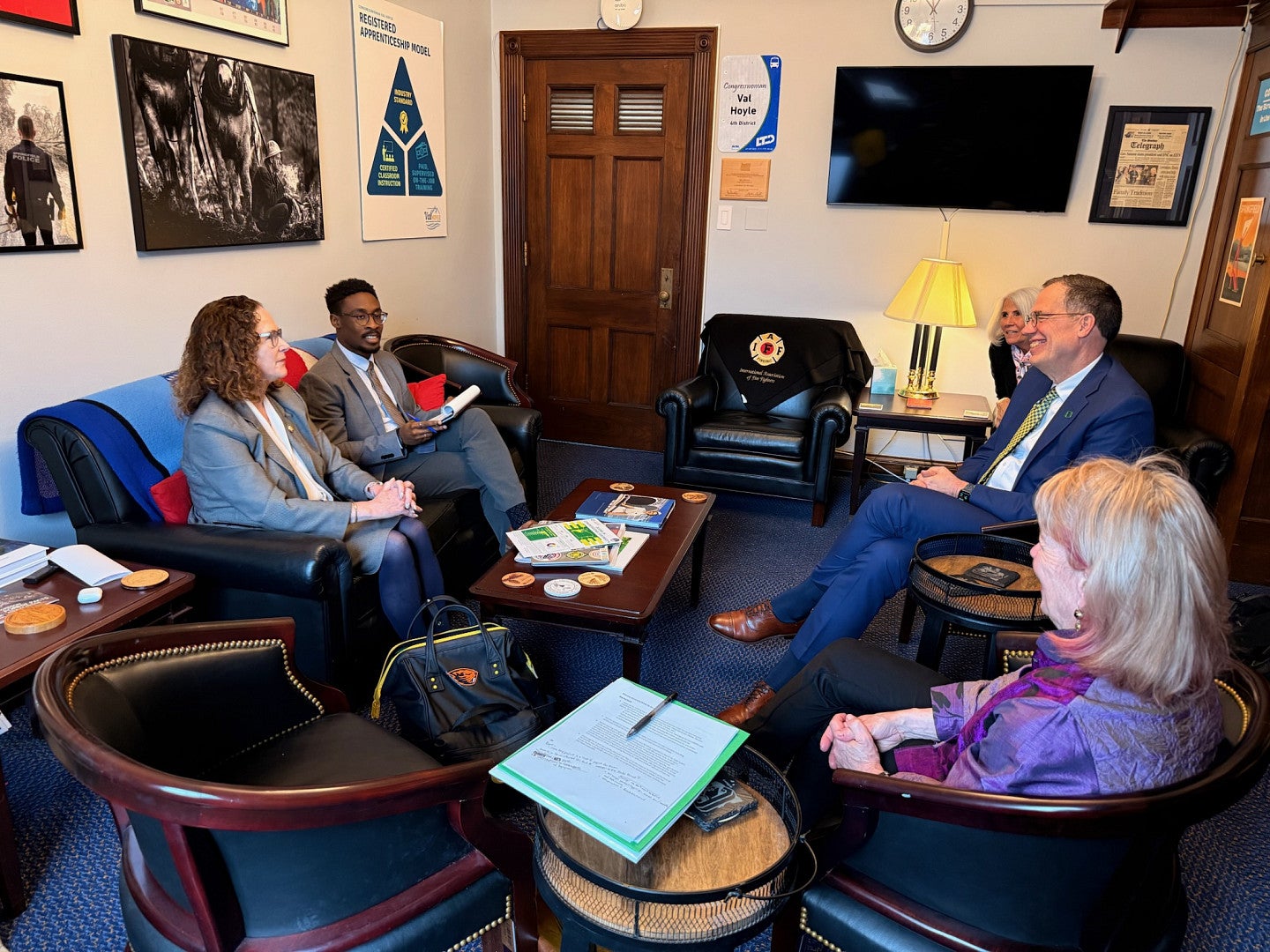
President Scholz expressed appreciation for the delegation’s work on the federal appropriations process and discussed Community Initiated Project (CIP) requests advanced by the UO that would support statewide wildfire monitoring and modeling, the Oregon Quantum Network Testbed, the Oregon Acoustic Research Laboratory, and expanded placements of UO College of Education Family & Human Services (FHS) undergraduates in rural Oregon communities.
He also shared updates on major university initiatives, including the continued growth of the Phil and Penny Knight Campus for Accelerating Scientific Impact and the Southern Willamette Valley Innovation Corridor. Both efforts are helping connect UO research and academic programs with workforce needs, industry partnerships, and economic opportunity in Oregon.
Across the meetings, President Scholz emphasized the importance of sustained federal investment in student aid and basic and applied research, from Pell Grants and work-study to major research programs funded by agencies such as the National Science Foundation, National Institutes of Health, and the Institute of Education Sciences. That support remains critical to the UO's work to support students, grow research, and serve communities across the state.