
The Oregon State Legislature adjourned its 2026 short session on March 6, closing a five-week session defined by budget uncertainty and the risk of cuts to state agencies and programs.
At the outset, state lawmakers were preparing for a significant shortfall in available funds for government operations and services. Public universities were asked to plan for potential reductions in state support, alongside other public agencies.
Supported by university and student advocacy, those reductions ultimately did not materialize.
Much of the early concern stemmed from a projected $650–$750 million state budget gap tied in part to federal tax changes under H.R. 1 and a slowing economy, which led public entities, including universities, to prepare for potential reductions in state support. A revised revenue forecast in early February improved the outlook, allowing lawmakers to avoid broad program cuts while balancing the budget through a combination of reserves and targeted adjustments.
Despite the challenging environment, the University of Oregon and its public university partners remained engaged throughout the session, working to protect student aid, university funding, and key policy priorities.
Here’s a look at what the session delivered and what it means for Oregon’s students and communities.
Operating Support
The Public University Support Fund (PUSF) remains the state’s primary investment in university operations, supporting instruction, student services, and day-to-day operations across Oregon’s seven public universities.
What we were facing: Potential reductions to state support as part of broader budget balancing.
What we received: The Legislature maintained current funding levels for public university operations by protecting state investments in the PUSF and Public University State Programs.
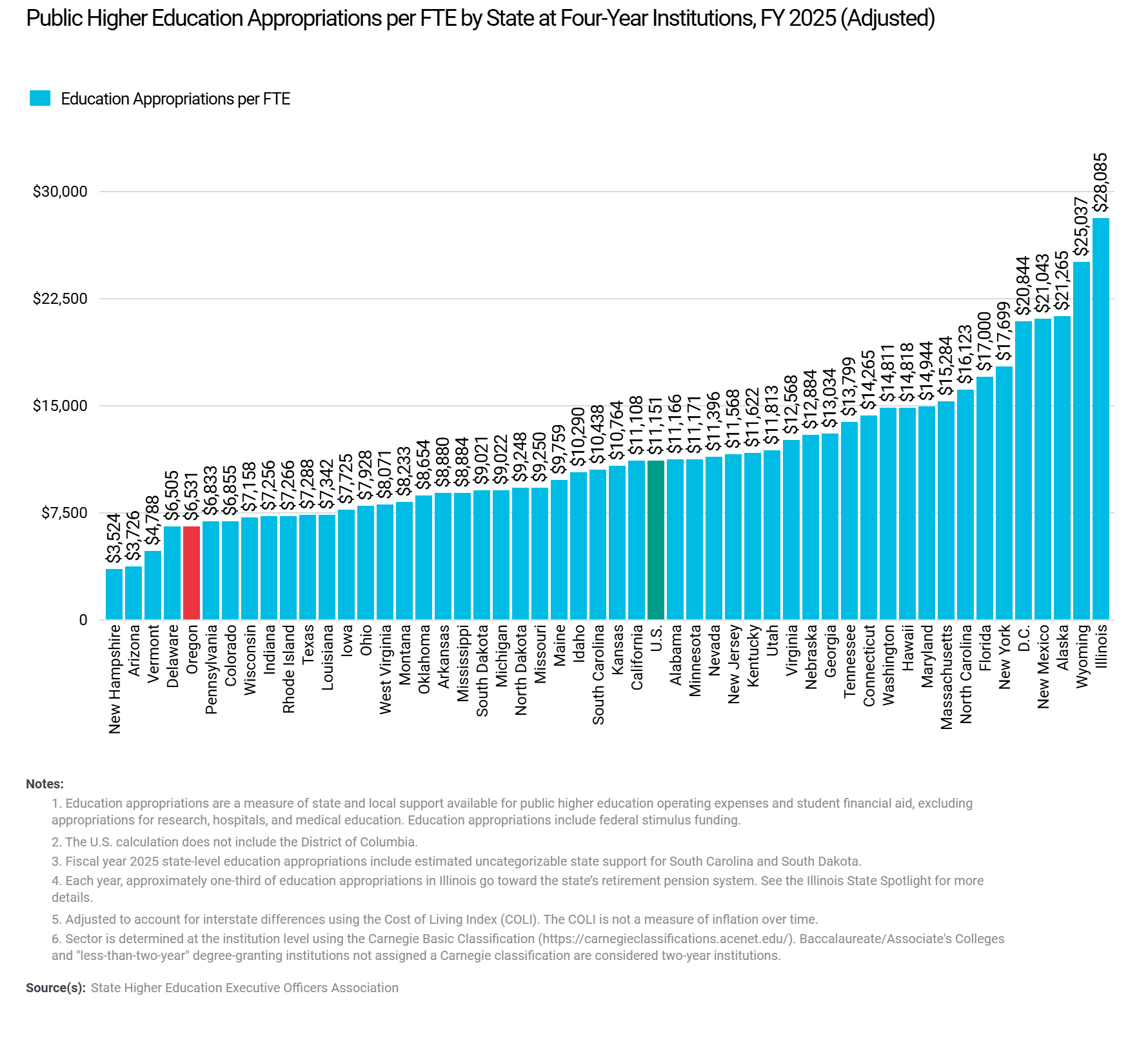
That outcome matters. Data from the 2025 State Higher Education Finance Report shows that Oregon ranks 46th in the nation for state funding per student. Maintaining funding avoids further erosion and provides short-term operational stability for institutions serving students across the state.
Student Financial Aid
Alongside operating support, lawmakers also maintained investments in need-based student financial aid programs, which support access and affordability for Oregon students pursuing higher education.
What we were facing: Potential reductions to student aid.
What we received: The Legislature maintained current funding levels for need-based financial aid programs, including the Oregon Opportunity Grant (OOG) and Oregon Tribal Student Grant (OTSG).
For students and families, this means continued access to the state’s primary financial aid programs at a time when affordability remains a real concern.
Targeted UO Priorities
In addition to maintaining funding, the session advanced several key University of Oregon priorities.
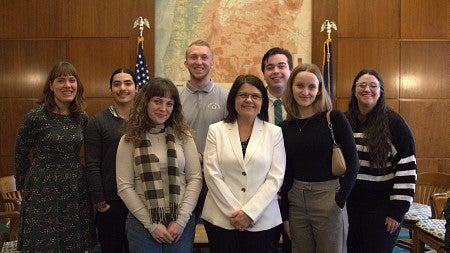
Behavioral Health Workforce (SB 1547): A key outcome of the session was the passage of Senate Bill 1547, which establishes a new licensure pathway for behavioral health and wellness practitioners. The bill passed with strong, bipartisan majorities in both chambers of the Legislature during the session.
The new license creates a bachelor’s-level, prevention-focused workforce designed to expand access to care for children and families. The University of Oregon’s Ballmer Institute for Children’s Behavioral Health helped inform the development of this model and prepares students for roles aligned with this pathway.
Oregon Hazards Lab (OHAZ): The Legislature approved $2 million in support for the Oregon Hazards Lab (OHAZ) at the UO, which maintains Oregon’s wildfire camera network, earthquake early warning infrastructure, and hazard monitoring systems used by emergency responders. The funding protects OHAZ's wildfire camera network heading into upcoming wildfire seasons.
Higher Education Policy
In addition to funding and program outcomes, the session included several policy changes affecting higher education.
- Higher Education Study (HB 4124): Directs the Higher Education Coordinating Commission (HECC) to conduct a statewide study of Oregon’s higher education system, with a preliminary report due in October 2026 and a final report due in 2027.
- Immigration Policy (HB 4079): Requires public universities to establish procedures for responding to federal immigration enforcement activity on campus, including verification, notification, and staff training.
- Governance and Public Meetings: New laws update ethics provisions and public meetings requirements for governing boards.
UO Advocacy by the Numbers

Students, faculty, staff, alumni, and community partners engaged throughout the session to support higher education priorities.
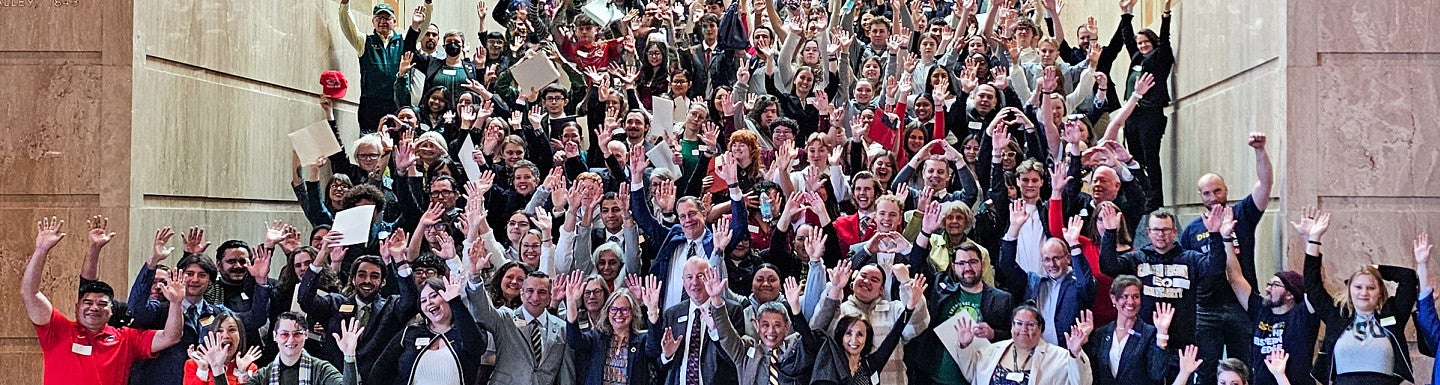
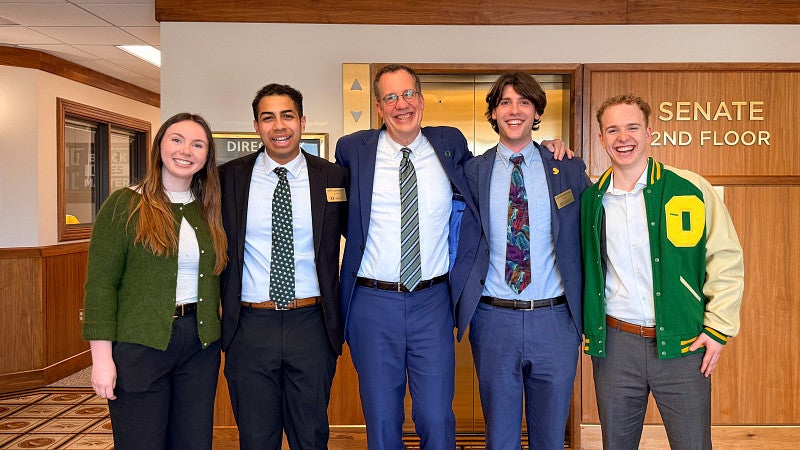
The capstone advocacy event of the session was University Day at the Capitol on February 12, which brought together more than 200 students, alumni, and faculty from Oregon’s public universities to urge lawmakers to protect state funding for public universities and need-based financial aid. More than 70 legislative offices met with university advocates throughout the day. UO staff played a leading role in organizing the event.
Additional advocacy efforts during the session highlighted key university initiatives including the Ballmer Institute for Children’s Behavioral Health, OHAZ, and the Southern Willamette Valley Innovation Corridor, helping legislators better understand the university’s contributions to workforce development, research, and regional economic growth.
At a time when cuts were on the table, advocates' engagement during University Day at the Capitol and throughout the legislative session helped keep higher education part of the conversation as decisions were made.
What Comes Next
The 2026 short session maintained funding for public universities and student aid during a challenging budget year. As policymakers look ahead to the 2027 legislative session, discussions will continue around long-term funding, workforce development, and the recommendations that will emerge from the statewide higher education study.
The University of Oregon will remain engaged in these conversations and will continue working with state leaders and partners to support students and strengthen Oregon’s future workforce.
Stay Engaged
Help advocate for the future of higher education in Oregon. Join UO Advocates to stay connected and make your voice heard.